Hi
The first of three hibernation surveys was undertaken this weekend just gone.
The number of bats was an all-time record - 168 bats. The previous highest was 152 (last January).
The overall species tallies were:
89 Natterer's, 44 Daubenton's (a record - previous highest 30), 3 Myotis sp., 17 BLE, 13 Barbastelle, 2 unidentified.
16 sites were checked in total across the Bedfordshire area. Thanks to those who took part and to the owners of the sites for access.

The Bedfordshire Bat Group was formed in 1988 and is affiliated to the Bedfordshire Natural History Society and a partner group of the national organisation, The Bat Conservation Trust. The bat group works for bat conservation within Bedfordshire and Luton;carries out surveys of bats and maintains a database of bat records; works with people to provide information and raise awareness of bat conservation; and, when necessary, carries out bat care and rehabilitation
Tuesday, 11 December 2012


Thursday, 6 December 2012
Ash Dieback and Bats, update from BCT
5 December 2012
Bats and Chalara dieback of ash trees: December Update
Ash trees make an important contribution to biodiversity and wildlife habitat and this includes use by bats for roosting where suitable opportunities arise. The recent confirmation of dieback in ash trees (Fraxinus excelsior) has implications for bats and UK biodiversity from the loss of trees to the disease and potentially from the measures put in place to limit the disease spread. BCT is working with the Forestry Commission to assess the situation as is it develops and put protocols and procedures in place that ensure that whilst carrying out the vital work to control the spread of the disease, that bats are protected.
The disease caused by the fungus Chalara fraxinea causes leaf loss and crown dieback in affected trees, and it can lead to tree death. It is a significant threat to one of our widespread native trees. Ash is the third most common broadleaf native tree species in Great Britain after oak and birch and is the predominant tree species in approximately 129,000 hectares of woodland in Britain. The fungus has caused widespread damage to ash tree populations in continental Europe and has the potential to kill millions of ash trees if it becomes widely established in Great Britain. The spread of this disease would pose a serious threat to associated biodiversity, including bats, and measures to prevent its spread are imperative. However, the potential for large-scale destruction of mature ash trees has raised concerns about the impact on roosting bats.
The current situation in December
The reported 100,000 trees already destroyed were all young transplants and nursery stock that were known or likely to be infected with C. fraxinea. Bats roost in mature ash trees and to date no mature trees were included in the destruction measures.
Initial work has focussed on identifying the locations where this disease is present. Initially this disease was thought to be, largely restricted to Norfolk and Suffolk. However, surveys carried out in recent weeks have found that its occurrence is more widespread across England including counties such as Yorkshire, Berkshire, East Sussex and Kent. It is thought likely that Chalara has been in this country for at least 2 years but was only recently discovered.
What happens next?
You can find out more about Ash dieback and the latest news from the Forestry Commission here www.forestry.gov.uk/chalara
We will keep the BCT website updated with further developments.
Bats and Chalara dieback of ash trees: December Update
Ash trees make an important contribution to biodiversity and wildlife habitat and this includes use by bats for roosting where suitable opportunities arise. The recent confirmation of dieback in ash trees (Fraxinus excelsior) has implications for bats and UK biodiversity from the loss of trees to the disease and potentially from the measures put in place to limit the disease spread. BCT is working with the Forestry Commission to assess the situation as is it develops and put protocols and procedures in place that ensure that whilst carrying out the vital work to control the spread of the disease, that bats are protected.
The disease caused by the fungus Chalara fraxinea causes leaf loss and crown dieback in affected trees, and it can lead to tree death. It is a significant threat to one of our widespread native trees. Ash is the third most common broadleaf native tree species in Great Britain after oak and birch and is the predominant tree species in approximately 129,000 hectares of woodland in Britain. The fungus has caused widespread damage to ash tree populations in continental Europe and has the potential to kill millions of ash trees if it becomes widely established in Great Britain. The spread of this disease would pose a serious threat to associated biodiversity, including bats, and measures to prevent its spread are imperative. However, the potential for large-scale destruction of mature ash trees has raised concerns about the impact on roosting bats.
The current situation in December
The reported 100,000 trees already destroyed were all young transplants and nursery stock that were known or likely to be infected with C. fraxinea. Bats roost in mature ash trees and to date no mature trees were included in the destruction measures.
Initial work has focussed on identifying the locations where this disease is present. Initially this disease was thought to be, largely restricted to Norfolk and Suffolk. However, surveys carried out in recent weeks have found that its occurrence is more widespread across England including counties such as Yorkshire, Berkshire, East Sussex and Kent. It is thought likely that Chalara has been in this country for at least 2 years but was only recently discovered.
What happens next?
- Any newly planted diseased trees or diseased trees in nurseries are being traced and destroyed.
- If the disease is found a containment notice will be issued to prevent plant material being moved off site.
- Mature trees will not currently be removed, as it has been acknowledged that they are valuable to wildlife, take longer to die and can enable more to be learnt about genetic strains that might be resistant to the disease.
You can find out more about Ash dieback and the latest news from the Forestry Commission here www.forestry.gov.uk/chalara
We will keep the BCT website updated with further developments.
Monday, 26 November 2012
Some bats still active

Despite the dreadful weather, we have had several sightings of bats flying in daylight in the last week. Presumably they are taking a last minute opportunity to try to catch food.
If you see a bat flying (in Bedfordshire) please let us know via the bat group e mail or at bats@bnhs.org.uk
If you live outside Beds, you can record your sighting on the Bat Conservation Trust’s Big Bat Map http://www.bigbatmap.org/
Monday, 12 November 2012
Ash Dieback Diease and Bats
Ash dieback disease
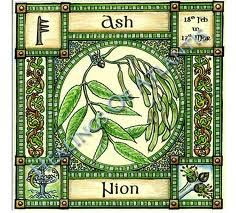
The ash tree is a much loved part of the British landscape and is a feature of much folklore. Yggdrasill the world tree of Norse cosmology was an ash and was seen to connect us to the Otherworld.

It is not just bat workers who have been greatly saddened by the news that Ash die back disease in widespread in the Country .

Ash is an important habitat for many creatures including bats and if there is widespread removal of infected trees, this will have a catastrophic effect on wildlife.
The Bat Conservation Trust is working very closely with The Forestry Commission to develop an appropriate policy to deal with this out break.
We wish them well and our keeping our toes and fingers crossed
1 November 2012
Ash trees make an important contribution to biodiversity and wildlife habitat and this includes use by bats for roosting where suitable opportunities arise. The recent confirmation of dieback in ash trees (Fraxinus excelsior) has implications for bats and UK biodiversity from the loss of trees to the disease and potentially from the measures put in place to limit the disease spread. BCT is working with the Forestry Commission to assess the situation as is it develops and put protocols and procedures in place that ensure that whilst carrying out the vital work to control the spread of the disease, that bats are protected.
Bats and Chalara dieback of ash trees
The disease caused by the fungus Chalara fraxinea causes leaf loss and crown dieback in affected trees, and it can lead to tree death. It is a significant threat to one of our widespread native trees. Ash is the third most common broadleaf native tree species in Great Britain after oak and birch and is the predominant tree species in approximately 129,000 hectares of woodland in Britain. The fungus has caused widespread damage to ash tree populations in continental Europe and has the potential to kill millions of ash trees if it becomes widely established in Great Britain. The spread of this disease would pose a serious threat to associated biodiversity, including bats, and measures to prevent its spread are imperative. However, the potential for large-scale destruction of mature ash trees has raised concerns about the impact on roosting bats.
The current situation
The reported 50,000 trees already destroyed were all young transplants and nursery stock that were known or likely to be infected with C. fraxinea. Bats roost in mature ash trees and to date no mature trees were included in the destruction measures.
Immediate work is focusing on identifying the locations where this disease is present. Currently this is largely restricted to Norfolk and Suffolk.
What happens next?
In the interim time the Forestry Commission and BCT will work closely together to produces a protocol that will i) Control the spread of the disease and (ii) Protect bats.
- If the disease is found a containment notice will be issued to prevent plant material being moved off site.
- Whether further containment action is required, such as tree felling, will be determined once the extent of disease after the initial survey work has been determined. The fungus does not produce spores at this time of year so immediate action is not required.
- If it is decided that some felling action is required then a destruction notice will be placed on the site.
You can find out more about Ash dieback and the latest news from the Forestry Commission here http://www.forestry.gov.uk/chalara
We will keep the BCT website updated with further developments.”
http://www.bats.org.uk/news.php/167/bats_and_chalara_dieback_of_ash_trees

The Defra website says
There are no plans to stop public access to forests and woodland as there is a very low risk of people transmitting the disease from area to areaThe fungal spores are spread by the wind. There is no evidence of transmission by humans or animals.
Monday, 22 October 2012
October Bat Box Check

Photo Laura Gravestock
The final bat check of the season took place on Saturday. All 53 boxes were checked and four were found to be occupied, one box had one soprano pipistrele, one had two and a third had three. The “winning” box had fifteen brown long eared bats in it including the one below which had unusually big eyes. It did not squint as it was brought into the light and we did wonder if it had something wrong with its sight


Brown long eared bat Photo Laura Gravestock

Photo Bob Cornes
When we find a bat we process it and then return it to its box. To prevent the bat flying off in the daylight, we stopper the box with some sponge, to give the bat time to settle. We wait 20 minutes before removing the stopper. While Aidan was waiting for the twenty minute to be up , he noticed a crack in a nearby tree. Looking closer he spotted a bat deep in the cavity – too deep to be identified. This is the second tree roost we have found while checking boxes and he first one that has been occupied. This is the final check of the year but we will be back next season.
Sunday, 30 September 2012
Swarming Survey at Luton Hoo
Hi All,
On Friday 5 of the team headed up to Luton Hoo to check for Autumn swarming around the hibernation site.
We know from past surveys that the site is used for this type of bat behaviour.
Two mist nets were put up, the first a 6m approx. 3m from the hibernation sites entrance and the second a 9m approx. 10m from the entance at a right angle to it.
In past surveys there has been almost constant activity around the small block of woodland that the hibernation site is situated in, however this time bats were lacking.
At about 20.35 a male brown long eared (BLEB) bat was caught in the 9m net. This gave Aidan the chance to remove the bat, as he is training for his licence. At around 21.35 another BLEB was caught, this time a female. Laura Gravestock extracted this one.
 BLEB extracted by Aidan, Photo: M O'Connor
All in all it was a bad night although Myotis bats were lacking from the site this year.
Another session is scheduled for the 4th Oct so with any luck the mytois bats will be about this time.
M
On Friday 5 of the team headed up to Luton Hoo to check for Autumn swarming around the hibernation site.
We know from past surveys that the site is used for this type of bat behaviour.
Two mist nets were put up, the first a 6m approx. 3m from the hibernation sites entrance and the second a 9m approx. 10m from the entance at a right angle to it.
In past surveys there has been almost constant activity around the small block of woodland that the hibernation site is situated in, however this time bats were lacking.
At about 20.35 a male brown long eared (BLEB) bat was caught in the 9m net. This gave Aidan the chance to remove the bat, as he is training for his licence. At around 21.35 another BLEB was caught, this time a female. Laura Gravestock extracted this one.

All in all it was a bad night although Myotis bats were lacking from the site this year.
Another session is scheduled for the 4th Oct so with any luck the mytois bats will be about this time.
M
Friday, 28 September 2012
Confirmed Brandts Bat
As we said in a, it is very hard distinguish between Brandt’s, whiskered and Alcathoe Bat. So we were pleased to be able to take advantage of modern technology and get a DNA analysis done on some droppings. The results came back yesterday (that was quick) and we are delighted that our identification was correct. We can now confirm that the bat pictured below is a Brandt’s Bat.


Photo Bob Cornes Brandt’s Bat
Box Boxes Checks

Photo Bob Cornes
We got round 32 of the boxes on Sunday before the rain came in.
Two of the boxes were occupied, both for the first time. One had 6 Soprano Pips
(five females and a smug male) and the other had 18 BLEs (9 females and
9 males).
It had begun to rain hard by the time we checked the last box which had the brown long eared bats in. So we took measurements and put then back in the box before they got wet and so took no photos. The plan is to check the remaining boxes tomorrow, if it will just stop raining.
Thursday, 13 September 2012
Additional info on the Geofforys bat
The bat was a male and was caught during a survey of autumn swarming bats near the Sussex coast.
Autumn swarming is a phenomenon which occurs at some (but not all) hibernation sites. Bats fly, sometimes over significant distances, to a hibernation site and fly around the entrance for a while. The name 'swarming' is not entirely appropriate because the number of bats flying at any one time can be quite small.
Males spend longer at swarming sites than females do, so that captures of bats usually show a preponderance of males even though probably similar numbers of females and males are involved overall. The functions of autumn swarming behaviour are not entirely clear, but probably include mating between individuals from different colonies (resulting in reduction of inbreeding), scouting out hibernation sites in advance of winter, and allowing juveniles to locate regularly used hibernation sites.
Bat species involved in this behaviour are the Myotis species, long-eared bats, Barbastelles and horseshoe bats. Recent work in Bedfordshire by the Bat Group has shown that several of our better-used hibernation sites have swarming activity of Natterer's, Daubenton's and Brown Long-Eared Bats and Barbastelles.
Geoffroy's Bat has not previously been recorded in Britain as far as I know, but it is present in coastal regions of northern France and southern Belgium.
The presence of a male at a swarming site in coastal Sussex is therefore not too surprising. Geoffroy's joins a list of European bat species which have been found in mainland Britain on one or more occasions - Kuhl's Pipistrelle, Savi's Pipistrelle, Parti-Coloured Bat, Northern Bat, Greater Mouse-Eared Bat (declared extinct in Britain in 1991, but still regularly recorded as a single male in a hibernation site in Sussex), Pond Bat and European Free-Tailed Bat.
There is no evidence at present of any of these species being resident in Britain. On the other hand, this was exactly the view taken of Nathusius' Pipistrelle until the discovery in the 1990s that it was breeding in both Britain and Ireland (and we have records of flying bats in Bedfordshire). The Alcathoe Bat was even more startling, with no British records until it was found, in 2010, to be present in both Sussex and Yorkshire. Also, with the effects of global warming on bat distribution extremely difficult to predict, it could well be that some European bat species could move into Britain in the next few years.
It's also worth noting that we have evidence of behavioual changes in Myotis bats in Bedfordshire woods very recently - Natterer's Bat, for example, has been notably absent during woodland surveys in the last few weeks at sites where it is usually found very easily. It could be a result of the unusual weather patterns this year, but who knows what to expect in the next few years?
Bob Cornes
Autumn swarming is a phenomenon which occurs at some (but not all) hibernation sites. Bats fly, sometimes over significant distances, to a hibernation site and fly around the entrance for a while. The name 'swarming' is not entirely appropriate because the number of bats flying at any one time can be quite small.
Males spend longer at swarming sites than females do, so that captures of bats usually show a preponderance of males even though probably similar numbers of females and males are involved overall. The functions of autumn swarming behaviour are not entirely clear, but probably include mating between individuals from different colonies (resulting in reduction of inbreeding), scouting out hibernation sites in advance of winter, and allowing juveniles to locate regularly used hibernation sites.
Bat species involved in this behaviour are the Myotis species, long-eared bats, Barbastelles and horseshoe bats. Recent work in Bedfordshire by the Bat Group has shown that several of our better-used hibernation sites have swarming activity of Natterer's, Daubenton's and Brown Long-Eared Bats and Barbastelles.
Geoffroy's Bat has not previously been recorded in Britain as far as I know, but it is present in coastal regions of northern France and southern Belgium.
The presence of a male at a swarming site in coastal Sussex is therefore not too surprising. Geoffroy's joins a list of European bat species which have been found in mainland Britain on one or more occasions - Kuhl's Pipistrelle, Savi's Pipistrelle, Parti-Coloured Bat, Northern Bat, Greater Mouse-Eared Bat (declared extinct in Britain in 1991, but still regularly recorded as a single male in a hibernation site in Sussex), Pond Bat and European Free-Tailed Bat.
There is no evidence at present of any of these species being resident in Britain. On the other hand, this was exactly the view taken of Nathusius' Pipistrelle until the discovery in the 1990s that it was breeding in both Britain and Ireland (and we have records of flying bats in Bedfordshire). The Alcathoe Bat was even more startling, with no British records until it was found, in 2010, to be present in both Sussex and Yorkshire. Also, with the effects of global warming on bat distribution extremely difficult to predict, it could well be that some European bat species could move into Britain in the next few years.
It's also worth noting that we have evidence of behavioual changes in Myotis bats in Bedfordshire woods very recently - Natterer's Bat, for example, has been notably absent during woodland surveys in the last few weeks at sites where it is usually found very easily. It could be a result of the unusual weather patterns this year, but who knows what to expect in the next few years?
Bob Cornes
National Trust Press Release
National Trust Press
Release
For immediate release – 12.09.2012
Species of bat discovered for the
first time in the UK
A species of bat normally found in continental Europe – the
Geoffroy’s bat - has been identified in the UK for the first time ever on
National Trust land in West Sussex.
Ecologist Daniel Whitby was conducting surveys in early
September when he caught a male Geoffroy’s bat (Myotis emarginatus), a small species which weights between six and
nine grams and has woolly fur with a foxy red tint to it.
Daniel Whitby, a Consultant Ecologist and bat specialist, said:
“It was a real surprise to catch this bat. Geoffroy’s
bat is nicknamed the Notch-eared bat because it has a distinctive notch in the
top part of its ear, with this, along with other identification features; I
quickly realized what an interesting bat I was holding”
“Bats are an amazingly diverse
group with over 1200 species worldwide and 17 species known to be breeding in
the UK, making up over a third of our native British mammals, yet we still know
surprisingly little about them.
“This is the second new species
recorded in the UK in the past few years after Alcathoe’s bat was also
discovered in Sussex and through research we are slowly learning about the
habitats of these fascinating but misunderstood creatures”
The National Trust is currently working closely with other conservation
organisations on the South Downs to improve its habitat management for bats in
woodland and on downland.
Dr David Bullock, the Trust’s Head of Nature Conservation said:
“This is great news and shows the importance
of the bat survey and monitoring work we do. Geoffroy’s bat is found in
continental Europe, including northern France, where it can be found foraging
for insects over scrub and grassland.
“It may be that this individual is part of a
colony or it may be another example of a new species moving in from the
Continent as we improve our habitat management and as our climate warms. Like
all other bats, it has protected status”
ENDS
Subscribe to:
Posts (Atom)